The maize ectopic TF expression atlas
As part of NSF Award #IOS-2315723, we are surveying the response to expressing a large collection of cloned maize TFs in leaf protoplasts. We have established high-throughput assays to transform hundreds of TFs in parallel using robotics, and then assess the full transcriptome-wide response to each by RNA-seq. There are 2,112 TFs and other regulatory genes being assayed, drawn from the Grassius TFome collection and supplemented by contributions from individual labs.
Project Team: UGA – Brad Nelms (PI), Wayne Parrott (Co-PI), Taylor Scroggs (PhD Student), Sungjin Park (Research Scientist); NC State – Cranos Williams (Co-PI), Max Gordon (Post-doc), Teague McCracken (PhD Student)
Q: What is the ectopic TF expression atlas?
Why ectopic expression? By ectopically expressing TFs at new times and places, it is possible to induce their target pathways and reprogram plant development. For example, two TFs, Wuschel2 (Wus2) and Baby boom (Bbm), stimulate regeneration from transformed genotypes of maize, rice, and barley that were historically recalcitrant, overcoming a major bottleneck in cereal crop transformation. Ectopic expression can also give clues about native TF function, complementing genome-wide binding assays and loss-of-function genetics.
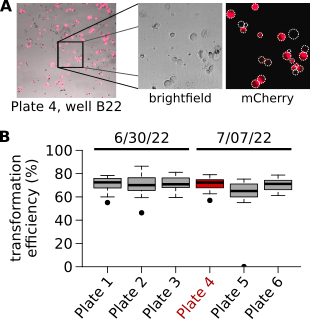
We have established methods for high-throughput transformation of maize leaf protoplasts in 384-well plates. Median transformation efficiencies are >70% and consistent between days:
After transformation, we measure the full transcriptional response by RNA-seq. We have found that individual TFs are sufficient to induce distinct and reproducible responses in protoplasts:
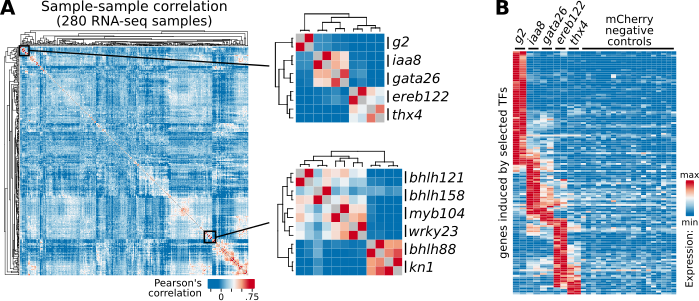
To date, we have completed one third of the planned survey (656 of 2,112 TFs). These data will be made accessible via SRA and MaizeGDB upon publication.
Are you interested in data for your favorite TF(s)? Please contact Brad Nelms for pre-publication data access requests (nelms@uga.edu)
Q: Where can I find your protoplast transformation protocols?
We use maize seedling leaf mesophyll cells for protoplast transformation. Our protocol is adapted from Cao, et al. (2014). The PDFs below contain our working protocols for tube- and plate-based transformation as well as our modified DNA miniprep protocol to produce higher yields of DNA. A manuscript describing and benchmarking the plate-based transformation method is under preparation.